


Reflections on My Violin Recital in London – 24 April 2026
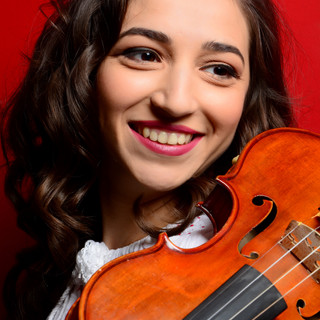
Preparing the Recital
After more than one month after my violin recital in London on 24 April 2026 at the Hampstead Garden Suburb Free Church, I finally found the quiet space to reflect on the experience. Preparing this classical violin recital felt deeply rewarding, especially thanks to the warmth of the audience — something that always renews my energy as a violinist.
In the weeks leading up to a recital, I usually go through a phase of critical listening and self‑questioning, on top of the physical practice of the concert programme. Thinking about each piece, I find myself questioning where I stand with it emotionally, and what it asks of me. Slow pieces open a wider space for expression, letting emotions unfold through sound and harmony. Fast pieces, on the other hand, accelerate the internal process, and the emotional charge shifts rapidly, almost like a chameleon changing its colours. This is very much what it’s like to prepare a violin recital from the inside.
Performing with Pre‑Recorded Accompaniment
The final two works of the programme, Jeno Hubay’s Scènes de la Csárda and Pablo de Sarasate’s Zigeunerweisen, brought their own challenge: coordinating the violin part with a pre‑recorded accompaniment. Performing Zigeunerweisen by Sarasate with a fixed track is a very different experience from playing with a pianist or orchestra, where the musical dialogue is responsive in real time.
Working with a fixed recording required me to study the accompaniment line in detail and create a reduced version that I could record myself on multiple instruments: violin, viola and piano. I was grateful to finish the creation of the recording in time before the recital. The editing process is still ongoing, and chances are it will always be. However, when it comes to deepening my understanding of these two violin pieces, recording their accompaniment lines made me more aware of the melodic lines that intertwine alongside the solo violin part, together with their supporting harmonies. This richness of acoustic information and stimuli makes the perception of a second seem way longer than it actually is, especially when playing live.
Premiering Sabino de Bari’s Capriccio e Taranta
Another highlight was the London premiere of Sabino de Bari’s Capriccio e Taranta for Solo Violin — a fiery, two‑movement work dedicated to me. The first movement is capricious and unpredictable, while the second bursts with virtuosic energy. Performing it with the composer in the audience added even more intensity and responsibility for me as a performer.
It was my first time premiering a new violin work, and the sense of awareness felt much deeper knowing how much thought and work went into it on both sides. This piece also represents a beautiful example of modern violin compositions and the evolving landscape of live classical music in London. I will share more about this work in a dedicated post.
Exploring Prokofiev’s Solo Sonata
Prokofiev’s Sonata for Solo Violin was another personal goal of mine, as I have wanted to explore this work for a long time. Its humour, contrasts, and sharp edges make it uniquely captivating. Preparing it for this recital felt like getting to know different parts of myself that could serve the meaning of each character change within the music of this work.
It is known that Prokofiev’s Sonata for Solo Violin, Op. 115, was dedicated to a group of violinists rather than to a single performer. The work was originally commissioned by the Soviet Committee of Arts as a pedagogical piece intended for violin classes to play in unison. Yet, despite its educational purpose, the musical material proved far too elegant and structurally compelling to remain confined to the classroom. Over time, professional violinists began performing it as a solo work, recognising that its clarity, wit, and expressive potential stood firmly on their own. What began as a collective study piece gradually entered the recital repertoire as a fully fledged solo sonata — a rare transformation in the violin literature.
Final Reflections
In the end, the audience enjoyed the recital, and seeing their happiness is always the greatest reward for me. For those interested, the archived programme can be found here. These classical music reflections are part of my ongoing journey as a performer, and I look forward to sharing more insights on my violinist blog.
Invitation to Join My Community
If you would like to stay connected, receive updates about future performances, and access members‑only content, you are warmly invited to join my community through the Spaces by Wix app. It is the closest way to follow my musical journey, enjoy exclusive insights, and be a part of my artistic community. Join here.


Comments